Showing posts with label PBS. Show all posts

Sunday, March 6, 2016

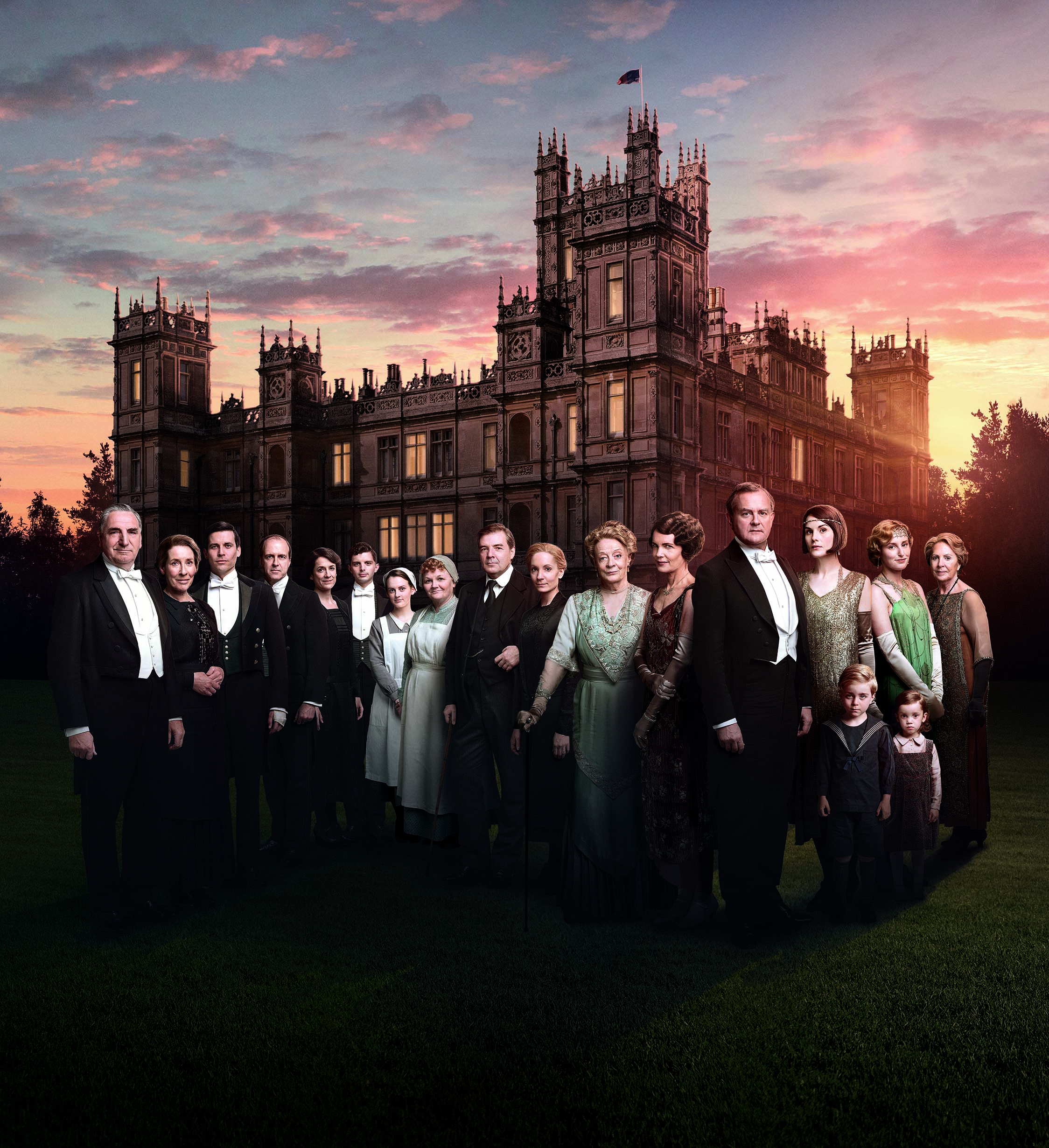
DOWNTON ABBEY WILL LIVE ON


2016-03-05-1457217405-2871074-DowntonAbbeySeason6SignatureImage.jpg
Courtesy of Nick Briggs/Carnival Film; Television Limited 2015 for MASTERPIECE


By Anne Zeiser, founder of Azure Media and author of Transmedia Marketing: From Film and TV to Games and Digital Media


The frenzy is full throttle for the series finale of Downton Abbey. Hashtag #DowntonPBS is afire with speculation about how it will end. Will Lord Grantham or Lady Violet die? Will Ladies Mary and Edith find true love?  Will the legacy of the Downton estate survive the changing times? Series creator and writer Julian Fellowes promises that all the current storylines will be resolved one way or the other.

If you think the critic and audience sensation is ending too soon, it isn't. It's ending just when it should because without Dame Maggie Smith playing the sharp-tongued Dowager Countess Violet Crawley (who told producers this would be her last season), the series would fall like a house of cards. As I say in this interview about the success of Downton Abbey for Emerson College, Voilet's the "fulcrum" of the series.

If you're feeling dread at the prospect of the plug being pulled on your drug of choice -- the soapy period costume drama set in post-Edwardian England -- don't lament, Downton will live on. In today's world of digital and transmedia content, strong brands live on forever. And the juggernaut Downton brand will be everywhere after the broadcast series ends. You can:
  • Binge-watch the series on PBS.org, On Demand on cable, YouTube, Amazon Prime, Hulu, iTunes or Blu-ray/DVD
  • See the memes of key characters' zinger lines on social media
  • Check out the parodies on Jimmy Fallon, The Colbert Report, and The Simpsons
If all that's not enough, rejoice because there's talk of Downton Abbey's rebirth on other media platforms. The producers have been in serious discussions about a feature film set a decade after the finale in a pre-WWII England focusing on the younger characters. If Sex and the City and Entourage were big screen-worthy,  Downton Abbey certainly is. There's even speculation about a play and a musical.

And if you want the backstory on how Masterpiece Theatre, which was mainly watched by older viewers, became the "It Girl" of television drama for a broader audience, read about the series’ makeover with its new name, updated look, and fresh marketing strategy in "A Rebrand -- Masterpiece Theatre Meets Masterpiece" in Transmedia Marketing: From Film and TV to Games and Digital Media.

The launch vehicle for the brand refresh was the January 2008 Masterpiece Classic, The Complete Jane Austen -- a film festival of the classic author's entire oeuvre. I designed this Masterpiece launch campaign, which integrated publicity, events, and digital marketing. To engage rabid Austen fans, the series partnered with the Jane Austen Society of North America to create online and on-the-ground events, including one with Miramax's Becoming Jane and Anne Hathaway. The publicity and social media and online audience engagement for the mini-series were astounding. In Transmedia Marketing, executive producer of Masterpiece, Rebecca Eaton cites the brand relaunch as integral to the series' current success:
With the on-air look, social media, and publicity of The Complete Jane Austen, we were laying the groundwork for the phenomena of Sherlock and Downton Abbey. 
-- Rebecca Eaton, executive producer, Masterpiece
In the meantime, relish the final (for now) 120 minutes of the Crawley family and their merry band of servants. When Downton Abbey's over and the cravings return, you can partake of the panoply of other options to get your Downton fix.

Or, you can watch the original Upstairs, Downstairs.

_____________________________________________________________________
This story also appeared after the broadcast of the finale in The Huffington Post 
_____________________________________________________________________

Anne Zeiser is a critically-acclaimed transmedia and social impact producer and media strategist. She's stewarded films and iconic series for PBS, produced news for CBS, managed national brands for marketing firms, and founded Azure Media, which develops transmedia projects on air, online, and on the go that fuel social impact in communities, in schools, and in capitals. With media partners from PBS and the BBC to Miramax and Sikelia Productions, Zeiser has successfully launched and marketed film studios and media organizations, feature and documentary films, television series and specials, mobile games and apps, and online video and media communities.  She's the author of Transmedia Marketing: From Film and TV to Games and Digital Media from Focal Press' American Film Market® Presents book series.

Tuesday, September 30, 2014

VACCINATING IS YOUR AND MY RESPONSIBILITY

Credit: "Ring-a-round-a roses" by Artist Jessie Willcox Smith (1863–1935), published 1912; Wikimedia Commons 


By Anne Zeiser, 
President and CEO, 
Azure Media

Author, 
Transmedia Marketing--From Film and TV to Games and Digital Marketing 
(Focal Press 2015)


Current generations may not know that the innocent childhood game “Ring-Around-the-Rosie” is a cultural holdover to the devastation that diseases like the Great Plague and the Black Death wreaked on human populations. Even in the 20th century, infectious diseases were such a dominant threat to the quality of life that Jonas Salk became an unintended folk hero for developing a safe polio vaccine. Today, most people don’t remember the heartbreaking and sometimes lethal effects of not vaccinating, hence can’t see their own vital role in public health. 

By 2000, the Center for Disease Control (CDC) declared a public health victory, that measles, which had once infected 3 to 4 million people and killed 500 yearly, had been eliminated in the U.S. through effective vaccines and public health systems. Yet in the spring of 2014, the CDC reported thatmeasles was back, placing it at its highest level in the U.S. in 20 years. This past June, California declared an epidemic of whooping cough – life-threatening for babies – with 800 cases reported in two weeks alone. The CDC and the California Department of Public Health were declaring public health failures.

You and I own that failure. Each of us is responsible for our collective health – a foundational principle of public health. With highly infectious diseases like measles, 95%of a community must be vaccinated to maintain “herd immunity” – the tenuous threshold of vaccination required to prevent outbreaks, thereby protecting the most vulnerable who can’t vaccinate, including the very young and the immune-suppressed. (When I was undergoing chemotherapy and wore a mask in public, I was grateful to each of you who vaccinated.)  When the vaccination rate drops below that threshold by just a few percentage points in a population, this safeguard can break down, often resulting in pockets of outbreaks. That’s happened within our borders – from California and New York to Ohio and Maine. And that can happen in your community when too few people vaccinate.

Science continually demonstrates that when vaccination rates drop, herd immunity collapses and outbreaks re-emerge and travel. There were 30,000 cases of measles in Europe in 20112,000 cases in the UK in 2012; and, there are almost 600 measles cases in 21 states in the U.S.now.  Public health policy is set based on that science and relies on you and me to protect vulnerable populations – which could be your newborn niece, your brother undoing cancer treatment, or your aging grandmother. Those with immature or compromised immune systems are even more vulnerable to vaccine-preventable diseases than healthy individuals. By not vaccinating, we’re all but placing them back in the era of the Bubonic Plague. Is that humane or socially responsible?

 Outbreaks in the developing world are an understandable byproduct of political strife or inadequate infrastructure. But here in the developed world, where we’ve had the science to hold these vaccine-preventable diseases at bay for decades, why are outbreaks of measles, mumps, and whooping cough back in the news?

Because of huge cultural differences between the 20th and 21st centuries. As we’ve enjoyed high levels of health, we’ve also lost our understanding of the urgency of public health. Preventative health is invisible. It’s hard to communicate until it's lost and its effects become visible. For some, then it’s too late. These outbreaks aren’t due to the lack of medical know-how or resources, but because some people don’t vaccinate or delay vaccination from fear of perceived risks or religious beliefs. While 90% of parents do vaccinate, and most do on the CDC’s recommended schedule, 10% of parents choose to delay or skip their children’s shots, and many parents have questions about vaccinating.

That hesitancy lies at the nexus of where science meets culture. Vaccinating children is inextricably linked to parents’ love and fear. The acute fear of deadly diseases that fueled panic about not vaccinating in earlier times, has been replaced by a new kind of pervasive fear about vaccinating, also born from parents’ abiding love of their children. That huge change in the CDC's reported measles rates in just 15 years may be attributable to one bad study and the panic it incited. In 1998, many parents fell prey to Andrew Wakefield’s fraudulent study of 12 patients citing a link between MMR-based vaccines (measles, mumps, rubella) and autism, peddled through the media by well-meaning celebrities. Understandably, some fearful parents opted out or delayed vaccination.

Fifteen years later, the MMR/autism link is one of the most researched areas in vaccines. The worldwide scientific consensus from myriad peer-reviewed studies of many thousands of subjects is that there’s no association between the MMR vaccine and autism. Wakefield has been fully discredited – his medical license was revoked, Lancet retracted the paper, citing Wakefield’sethical misconduct, and study authors acknowledged, "We did not prove an association between measles, mumps, and rubella vaccine and the syndrome described.” But the urban myth persists among entirely new generations of parents because it was so effectively perpetrated through word-of-mouth.  And it stuck because some parents are less likely to trust scientific institutions and medical experts than celebrities and information circulating on the Internet. For them, questioning vaccinations is a sign of love and vigilance.

Social media myths about such an emotionally-charged subject can influence the reception of expert information from dedicated scientists, doctors, health care professionals, and public health officials. Resulting slips in vaccination rates can put public health in the balance.  To protect their constituencies, state policy makers are tightening vaccination exceptions. http://www.kpbs.org/news/2014/jan/02/new-law-requires-doctors-note-vaccine-exemptions-c/While this increases vaccination rates and minimizes outbreaks, it doesn’t close the science understanding gap, which is paramount for the long-term vibrancy of communities and economies. 
           
One way to close that gap is to present science in accessible ways that acknowledge and tackle parents’ questions. NOVA’s Vaccines – Calling the Shots, produced for NOVA by Tangled Bank Studios in association with Genepool Productions, recently premiering on PBS, does just that. Featuring scientists, pediatricians, psychologists, anthropologists, and parents wrestling with vaccine-related questions, the hour-long film explores the history and science behind vaccinations, tracks outbreaks of previously eradicated diseases, sheds light on the risks of opting out of vaccinating, and presents new science on the genetic causes of autism. The film is streamed online along with a rich array of digital assets, together examining the science and the cultural, policy, and public health implications of vaccines.

Hopefully, this new entrĂ©e to vaccines will seed an informed, non-polarizing dialogue about the best way to protect our families and communities.  And, perhaps it will help you and me see how our understanding of science and our choices about vaccination are critically linked to public health and to each other’s well-being.

Anne Zeiser is a media professional, including working in science and health communications. She contributed to NOVA’s Vaccines – Calling the Shots. (You can join the conversation at #vaccinesNOVA) Anne Zeiser tweets via @azuremedia


This article can also be seen in the Huffington Post at this link