Showing posts with label audience engagement. Show all posts

Tuesday, May 12, 2015

THE GREAT PUPPY BOWL -- Budweiser-6; Go Daddy-0

2015-02-02-rs_600x600150122101946600.BudweiserLostPuppy.jl.012215.jpg
Courtesy of Anheuser-Busch.com


By Anne Zeiser, founder of Azure Media and author of Transmedia Marketing: From Film and TV to Games and Digital Media


In the great American advertising faceoff at this year's Super Bowl, two adorable Golden Retriever puppies serving as proxies for two mega brands - Budweiser and GoDaddy - almost went head-to-head.

The best advertising captures audiences' imaginations. It tells a story, produces emotion, and fulfills deep-seated needs. Humans love to laugh, feel smart, affirm their lives, and be part of a community. Good creative does all that. So, despite knowing they're being sold to, audiences love great ads. That's why a huge part of Super Bowl viewing is attributable to the promise of seeing some of the most creative or compelling ads of the year.


Here's how each brand suited up their pups for the big kickoff:
  • Budweiser pulls at our heart strings with its warm and fuzzy sequel to last year's "Puppy Love" spot, chronicling the inseparable bond between a Golden puppy and a Clydesdale horse. In the Super Bowl IV, "Lost Dog" installment, the puppy is inadvertently lost and we follow his quest - braving harsh elements and miles fraught with nefarious threats - to get home safely. No spoiler here, with a little help from his friends, the #BestBuds are united. This heartwarming and life-affirming ad plumbs our emotional depths, and by association makes beer family-friendly (no mean feat within the alcohol category). This spot was directed by Jake Scott (Ridley Scott's son) of RSA Films.
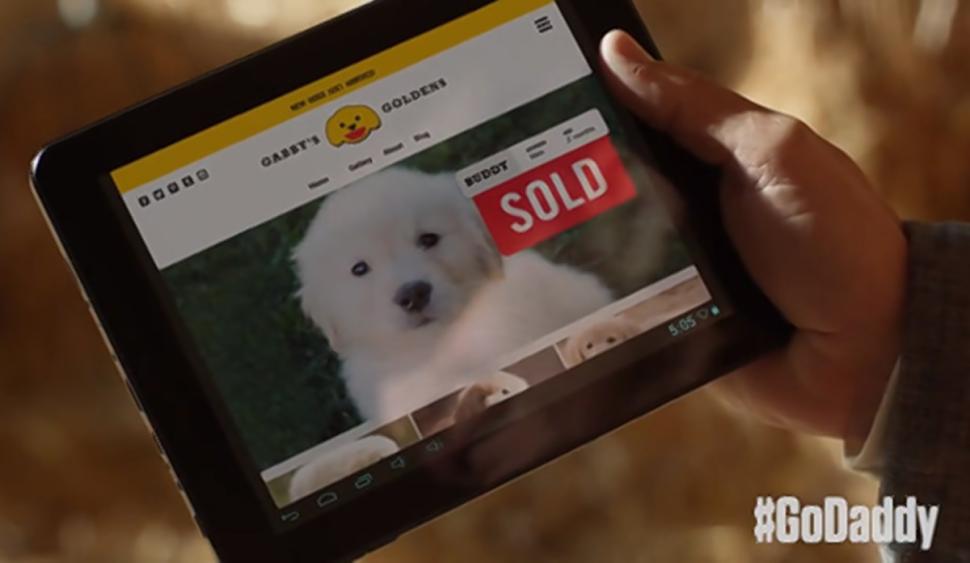
  • GoDaddy reaches beyond its limited ad portfolio of the inexplicably raunchy or anything with Danica Patrick to parody this saccharine canine saga of lost puppy "Buddy's" treacherous "Journey Home." But upon the pup's victorious return, he is promptly sold online (thanks to GoDaddy technology) and coldly shipped out to places unknown. This sarcastic and mean-spirited ad gives more homage to the Budweiser brand than its own and reveals the creators' huge blind spot for what is and isn't funny. This ad was created by agency Barton F. Graf 9000.
2015-02-02-godaddy29n3web.jpg
@Pet360/Twitter
Budweiser's ad scores a touchdown of big love before the big game and GoDaddy's gets an incomplete pass, with its ad yanked from the Super Bowl just hours after its debut on "The Today Show" due to a hue and cry from offended fans and animal rights advocates. Why does the beer company's more predictable and syrupy ad achieve a giant win and GoDaddy's riskier and potentially more creative spot score an epic fail?

There are three key reasons that Budweiser's campaign connects and GoDaddy's fumbles - all rooted in key tenets of sound marketing and promotion. These marketing principles and other fundamentals of entertainment and media marketing are covered in my upcoming book Transmedia Marketing: From Film and TV to Games and Digital Media.

#1: Know Your Story 

Since the days of cavemen, humans have been impelled to tell stories, spinning a good yarn enhanced by the special effects of the flickering campfire. Ancient storytelling is documented in France's Chauvet Cave walls from almost 30,000 years ago. There are seminal stories that we all relate to that are retold millions of times in many forms - from oral storytelling traditions and ballads to films and multi-player games. According to Christopher Booker's The Seven Basic Plots, there are seven archetypal stories that appeal to universal emotions: Slaying the Beast, Rags to Riches, The Quest, Voyage and Return, Comedy, Tragedy, and Rebirth.
  • Budweiser's "Lost Puppy" ad is The Quest - the protagonist's journey toward a major goal. Some key examples from literature include Homer's The Odyssey, Jason and the Argonaut's recovery of the Golden Fleece, and A Midsummer Night's Dream, and from modern entertainment, The Wizard of Oz, Lord of the Rings, and Finding Nemo. In The Quest stories, we want our heroes to make it "home" almost as much as we want to breathe. When they do, it is profoundly comforting and satisfying.
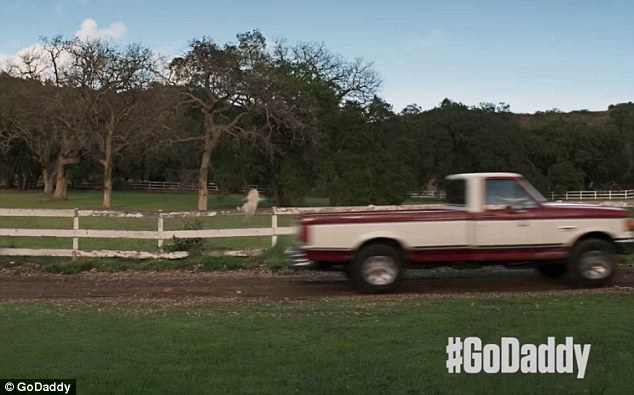
  • GoDaddy's "Journey Home' parody was aiming for Comedy. This plot needs a light and funny hero who triumphs over an adverse situation or unteases misunderstandings, resulting in a happy ending. Some key examples from literature include Shakespeare's A Midsummer Night's Dream, Much Ado About Nothing, and Twelfth Night, and from modern entertainment The Importance of Being Earnest, Four Weddings and a Funeral, and Lizzie Bennet's Diaries. In "Journey Home," if there had been several humorous happenstances (perhaps all powered by GoDaddy) along the puppy's journey that ironically landed the puppy home, the ad might have worked brilliantly. But our canine hero made it home on his own steam, only to be callously sold. Hence, the ad became a heinous abomination of the Tragedy, a storyline in which the protagonist is a villain, (not an innocent puppy) who falls from grace (not a speeding truck) and whose demise is a happy ending. Some key examples from literature include Macbeth, Romeo and Juliet, and Les Misérables, and from modern entertainment, The Great Gatsby, Chinatown, and Crash. But since this puppy is not a villain, the unhappy ending is a massive emotional assault. The spot delivers on neither Comedy nor Tragedy.
2015-02-02-251F91AE000005780Plot_twist_The_truck_hits_a_rock_and_the_Golden_Retriever_puppy_m79_1422392782307.jpg
Courtesy Daily Mail.com January 27, 2015

#2: Don't Mess With Babies and Puppies

Another key tenet of effective marketing and promotion is that celebrities, sex, babies and puppies sell. Celebrities have endorsed products to make them "cool" since the '20s when Chesterfield and Lucky Strike cigarettes used actors, comedians, and opera singers to create a whole new generation of smokers. Beyoncé endorses Pepsi and LeBron James endorses Nike. Selling with sex appeal is one of the oldest saws in the advertising industry, predicated on Boy Gets Girl and visa versa. Clairol's "Does she . . . or doesn't she?" signature 1957 campaign was about the lengths women go to look beautiful. The car industry has adorned cars with beautiful women to make men take notice. David Beckham's almost-nude 2012 Super Bowl ad for H & M clothes garnered almost 110,000 social media mentions within 45 minutes. 

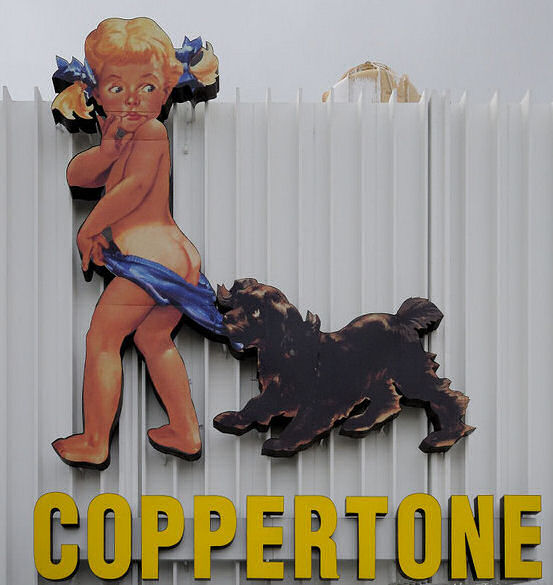
Then there's the adverting cliché of babies and puppies. The mere sight of them elicits an emotional reaction, which is why animal and kid photos and videos are the most shared on social media. We are evolutionarily wired to feel compassion and a sense of protection toward young creatures. That's why we think babies - and by extension puppies and kittens - are cute. It ensures our species' survival. These scientific and psychological truths haven't escaped advertisers. For more than 60 years, Coppertone has used "Little Miss Coppertone," an energetic little girl whose fun-loving cocker spaniel grabs her skivvies to reveal her tan line. This still vibrant brand offers a two-for-one special - a cute little girl and her dog.
2015-02-02-Figure24.2_Coppertone_sign_miami.jpg
By Alexf; licensed under creative commons via Wikipedia Commons
  • No surprise, Budweiser's huggable little Golden Retriever Puppy (the most popular dog breed in the U.S.) juxtaposed against the grandeur of the beloved massive Clydesdale draft horse makes for an irresistible strange bedfellows animal love story. This original story and its sequel leverage the equity of the Clydesdales, which have captured Americans' hearts for almost three decades, and adds another huggable character. Twice the lovability.
  • The moral of this story for GoDaddy is you can't add an evil twist that jeopardizes the heartwarming appeal of babies and puppies. It's a simple, straight-forward emotion. You can add some humor to hit another emotional note like Geico's "Camel Hump Day" does - the obnoxious camel crashing offices to celebrate Wednesdays and therefore him. But it still must be a happy, uplifting resolution. So when Buddy's owner says, "I'm so glad you made it home! Because I just sold you on this website I made with GoDaddy. Ship him out!," GoDaddy messed with the requisite happy ending, thereby breaking the rules of story plot and of how to treat cuddly babies.
#3: Don't Underestimate the Power of Digitally-Engaged Audiences

Sound marketing, like all good storytelling, engages audiences by reaching the limbic part of the brain. It creates opportunities for audiences to find meaning in and authentically participate with a brand on various media platforms. This translates into audience loyalty for and ambassadorship of a project - the Holy Grail of branding, marketing, and engagement. When fans use, love, and tell others about your media content or project, that's a smash hit.

Social media enables audience ambassadorship of a product. That's because the social universe is about self-expression through personalized social storytelling - audiences sharing what they deem interesting, important, or funny; telegraphing who they are and what they believe in; and recommending products or supporting causes. The trick is to get social audiences to become co-protagonists, connecting their personal stories to your brand's narrative. 

To harness its immense power, social media is used as the vital connective tissue to various elements of a brand or its marketing. Hence, most Super Bowl TV spots are launched online before the big game and promoted leading up to and after the event.
  • Budweiser's "Puppy Love" spot from last year's Super Bowl was the most shared and beloved ad in Facebook history. This year's "Lost Dog" promises even more audience engagement. First, the Super Bowl spot was treated like a feature film with its own online teaser campaign of images and animated GIFs of the pup's journey home, created by Anomaly. In addition, Budweiser developed an online campaign for audiences to find the pup, launching on Twitter on January 7th with a photo of the rancher and his Clydesdale hanging "Lost Dog" signs. It was followed by a January 21st tweet, "Help our rancher find his puppy and you could win tickets to the Super Bowl. Watch to learn how. #BestBuds #sweeps" with a video explaining the contest. Daily tweets entreated fans to be on the lookout for the lost dog and participate in the sweepstakes. Fans nationwide have posted pics of the "Lost Dog" and other brands - from @USATODAYmoney to @lenovoUS - have lodged support for the pup, all using the campaign's hashtag, #BestBuds. The online "Lost Dog" spot has garnered 55 million views before the Super Bowl.
2015-02-02-tweetcontest.tiff
@Budweiser/Twitter
  • Because GoDaddy's spot features a puppy that is sold online, animal rights advocates felt it implied endorsement of illegal puppy farming. The animal protection charity, The SPCA posted tweets using hashtag #GoDaddyPuppy, condemning the spot and explaining why buying a puppy online may be irresponsible. As a result, the animal anti-cruelty crowd erupted online. Animal rights advocate Helena Yurcho launched a Change.org petition to pull the ad, securing more than 42,000 signatures in a day. GoDaddy capitulated quickly with CEO, Blake Irving saying on a January 27th statement, "....we underestimated the emotional response. And we heard that loud and clear. The net result? We are pulling the ad from the Super Bowl. You'll still see us in the Big Game this year, and we hope it makes you laugh." Cynics think it was all on purpose. Most likely, it was a big gaffe, because "all publicity is good publicity" simply isn't true. "The Journey" satire reveals the dangerous flip side of the power of engaged social audiences who critique with as much fervor as they support.
2015-02-02-SPCA.tiff
@animalrescuers/Twitter
This puppy saga demonstrates that ads are short stories and that there are some key storytelling principles that good ads most follow. What is says about the Patriots' and Seahawks' face-off is hard to divine, but surely there was a narrative to the big game. It may fall into one of the seven archetypal stories: Slaying the Beast, Rags to Riches, The Quest, Voyage and Return, Comedy, Tragedy, and Rebirth. Of course, who's the protagonist and who's the antagonist depends on your football team allegiance.

Which of the seven seminal storylines you think the Super Bowl followed and why? Follow Anne Zeiser on Twitter @azuremedia

Monday, February 8, 2010

THE SUPER SOUL(-less) of ADVERTISING


Welcome to Super Bowl XLIV on CBS.


What makes this a destination TV event, besides the pigskin thing? It's that the marketing community has successfully created the aura of a cultural phenomenon – between downs – with the viewer enjoying front-row seats to what’s hip and different in advertising. I might grant you the hip, but rarely the different.


Most aspects of the entire event don't change much. A 30-second spot reaching some 100 million, mostly male, viewers costs 2.5 to 3 million dollars, about a half a million dollars down from last year’s prices. Being there still signals a brand's vibrancy...at least for now. This ritual of bated anticipation of funny, cool ads is simply viral marketing with the highest possible cost per thousand barrier to entry. While last night’s hopped- and nachoed-up viewers sought entertaining ads, instead they got a lot of uninspired, formulaic advertising, with but a few exceptions.


Generally, there are patterns in Super Bowl ads and I've clustered them in eight categories: Men Are From Mars, Men Are From Venus, Vroom Vroom, Dogs and Babies, Come on Get Happy, The Gadget, Get the Hell Out of My Biker Bar, and My Turn. Here are some examples from last night’s Big Game:

MEN ARE FROM MARS (THE 15-YEAR-OLD’S VERSION OF THE RED PLANET) – this plays out either as sex sells (the objectification of women) or boys doing dumb things.
· GoDaddy does it with a contrived twist, submitting a homophobic spot to CBS, knowing its rejection would build buzz and drive traffic to the spot’s online presence and awareness of different spots on the broadcast. The rejected spot was a former football player who turns into a flaming entrepreneur using GoDaddy. Instead we get a spate of sexy and mindless spots like a couple of guys logging on to GoDaddy (on a web TV set up) to test some domain names to be greeted by a super hot clip from Danica Patrick, and, they get a different clip for each domain name they enter. Talk about immediate gratification. Other spots had lots of sexy, but boring women talking about how hot that other spot was and how you can see it online. It will probably work, but I don’t have to like it.
· Bridgestone Tires was pretty noticeable, sponsoring the half-time show (more on that later). In the first spot a car-full-o-guys with a whale in the hatchback race to deliver it to the water. At the end of a pier, the young guy driver pulls a half-donut maneuver that launches the whale safely into his natural habitat. Speaks to the product’s benefits, yes, but a little too much of “guys doing stupid things.” In another spot, a male driver would rather give up his wife rather than his tires (misogyny rules).
· Doritos crash casket was one of these. A supposedly dead guy is in his casket full of Doritos during his funeral. He’s munching away watching the game on a small monitor inside of the casket. He bursts out of the casket in exuberance and his buddy saves him by going to the front of the church and singing a redemptive tune as if a miracle of rebirth just occurred. Huh?
· There are other examples from Game XLIV, but they’re so boring and soulless, they’re not worth dignifying.

MEN ARE FROM VENUS, WOMEN ARE FROM MARS – Shakespeare did this best in “Macbeth” and “Taming of the Shrew.” But in this year’s myriad iterations, the men are completely emasculated, whipped by the women in their lives. Must be some kind of commentary on the current state of American men.
· Dockers’ first Super Bowl entry shows men in their skivvy’s traipsing around in fields ready to transform into enlightened men wearing pants…big surprise, Dockers. (N. B. CareerBuilders.com first spot directly followed this Dove spot showing people in their underwear in the workplace redefining casual Fridays, completely killing the surprise factor. Shame on CBS for not orchestrating the flow better.)
· Dove realigns its focus from women to men, also giving us a male coming-of-age story. This time showing a man fully evolved into using grooming products.
· Snickers, which is my favorite in this category, simply puts the cutest woman on television, Betty White, at the Kennedy compound playing football with the guys. Once she gets her candy fix, she transforms into the male fighting machine she can be. Three things make this work: Betty, her impossibly perfect baby blue and white sweater, and the slo-mo camera footage that gives us more time to look at the first two reasons, Betty and her sweater.
· FloTV, a new entry (which I’d never heard of and is also in the Gadgets category) has an ad with a guy shopping reluctantly, but obediently with his gal. He yearningly sees bits and pieces of The Game as he moves around the mall. FloTV shows us how mobile TV can help you bring the game with you.
· Bud Light's entry features a guy leaving the house while his lady is just starting her book club (probably ready to discuss a Jane Austen novel). When he sees they’re serving Bud Light, he’s instantly “in,” discussing the virtues of romantic love or some such thing. Would have been funnier two years ago when “Jane Austen Book Club” was in the theaters.
· Dodge Charger’s repressed guy can’t make any of his own decisions about what he wants to do in life. “She who must be obeyed” is always off screen, but omniscient. She owns his every decision except….what car he drives. The Charger is “Man’s Last Stand.”

VROOM VROOM – horsepower equals virility.
Of this year’s auto brands in the Super Bowl, most are foreign. That may speak to Americans’ decreased trust in Detroit (even though foreign and American are all the same car companies these days). As expected, lots of spots this year.
· Hyundai owned this category in terms of coverage. It sponsored the half-hour “Hyundai Kickoff Show” and had a strong presence throughout the game. The auto maker tried to establish its gravitas by touting stability control features, the love and care of the making in an Alabama plant, and dependability in a spot looking 10 years hence, juxtaposing Brett Favre 2010 as Super Bowl winner with the reassurance of the brand’s known reliability. My favorite was the simple Sonata spot using a play on words on classical musicians’ sonatas, while showing a Sonata being artfully dipped in a vat of paint, finally resolving to a card about its better paint quality than Mercedes’. Surprising theme, except that I recently learned that paint color is one of the top three criteria (features) for people making car decisions.
· VW also tapped the paint color theme and married it with childhood car games in “PunchDub.” It showed people of all types and ages in various situations, hitting their companion and saying “yellow one” when they saw a VW. The last example in the string was Stevie Wonder saying, “red one” and an incredulous Tracy Morgan asking how he did that. This spot used a unifying cultural meme to show its 13 models, not to mention their paint colors. A sweet, thoughtful ad.
· Others deserving special merit were Audi’s spoof on the pressure of living a green life monitored by the “Green Police” and Kia Sorento’s sock monkey and other toys coming to life. The forgettable car ads were Ford Fusion, Mitsubishi Lancer, Acura, Lexus RX, Honda Accord, and mostly Toyota, given all they have going on, they ran old unmemorable old ones. Did they pull some newer or better ones that would make them stand out?

DOGS AND BABIES ALWAYS SELL – A nod to the chicks (literally and figuratively) and the softer side of men.
· Budweiser’s Clydesdales are back and well they should be. Their fuzzy white fetlocks are enough to make you swoon. This year’s episode of the massive equines begins with a foal and a young calf running together along a fence. Three years later, the two big, male beasts (lots of horsepower here) are reunited. The spot resolves to the tagline, "Nothing comes between friends, especially fences." Kind of schmaltzy, but I love horses, so it wins.
· Denny’s was another big one in this area, with a string of spots that worked best if you saw the first one. A voiceover announces to a gaggle (?) of chickens that the Grand Slam Breakfast is coming soon, intimating that egg production must go up. The chickens usher out a primordial scream, which inevitably makes the corners of your mouth turn up. The subsequent spots throughout the game continue the spoof, showing chickens from all walks of life, even male ones with ties (don’t they know only the girl ones lay the eggs?) hearing about the egg-laden Denny special and joining the screaming chorus. I liked them. Funny and memorable.
· Doritos had an ad with a man on a bench taunting a dog with an anti-bark collar to “speak” if he wanted a Dorito. The dog then turns the table on the guy, putting the collar on the human and victoriously grabbing the bag of Doritos. My 5-year-old loved this one.
· E*Trade had several ads with babies talking to us from high chairs and from an airplane about…different stuff. I think it was meant to make the analogy between keeping your dating options open and having a diversified portfolio? The kids were adorable and I watched every moment to see if their body language tracked with the moving mouths. But I got nothing from the ads about the product or a call to action (to go to the site). An example of where the trickery gets in the way of the brand and its message.
· Diamond Foods switched out the concept and had a bunch of humans acting like trained dolphins in a water show, jumping for the reward of Emerald Nuts and Pop-Secret popcorn. Call this one "Stupid Human Tricks."

COME ON GET HAPPY – Food, drink and the Super Bowl equals love.
· Doritos “House Rules” example has the cutest little boy ever eating Doritos as a man arrives to take his mom on a date. As she goes to the next room to finish getting ready the boy delivers the house rules to the suitor, “Keep your hands off my Mamma; keep your hands off my Doritos.”
· Coke’s arrival is actually noteworthy in the context of the cola wars. This is the first time the Atlanta-based purveyor of sugared water has advertised in the Super Bowl without rival Pepsi being present. Pepsi owned the category for most of its 23 years, only going head-to-head with Coca-Cola for the past few. As for Coke’s three spots, the most memorable was the Homer Simpson spot featuring a billionaire who lost it all and gets down to the real world level at a park, is offered a Coke by a regular “Joe” and by association, happiness – all in the joyful town of Springfield.
· Snicker’s Betty White ad could be here also.
· Budweiser had a number of entries in this arena. The first was the house made of beer cans (which was close to belonging in the Men are From Mars category). The best one was the human bridge made by residents of a town whose only egress is that bridge. They come together, lay themselves upon each other to get the Budweiser truck across the broken bridge into town. There was a spoof on “Lost,” an invasion of asteroids that can't stop the party, a direct lift from the “Whassup” spots from years ago, and a spot for Select 55 looked like an afterthought. Overall, Budweiser’s Super Bowl presence was uneven in quality. And, the message was all over the place.

THE GADGET – what’s the coolest technology I absolutely need to know about?
· Google wins this one hands down. It’s a beautiful little narrative love story set to music, beginning with a man entering “study abroad” into the search window, thereafter entering various searches that speak to the evolution of his relationship with a Parisian woman, and ending with “how to assemble a crib.” This ad owned me every single second, made me smile, and reminded me of how great Goggle is.
· FloTV gets a nod for a grown up spot called “My Generation” showing the influence of TV on our lives. It’s selling the medium first and the device second. (The other spot in Men Are From Venus sells the device.) This ad is a bit reminiscent of last year’s Pepsi spot, “Forever Young,” which I simply adored.
· Motorola's ad for a handheld device plays on America’s celebrity obsession and teases the viewer with the possibility of Megan Fox taking a photo of herself in a bathtub and sending it out into the net. The spot shows the wacky possibilities if she did, but doesn’t get too raunchy.
· Cars.com was almost in Vroom Vroom, but on second thought, it was really about the gadgetry of the site. This was a solid spot about the guy who over-excelled at everything from childhood into adulthood. But when it came to buying a car he as out of smarts. So he goes to Cars.com and is replete with knowledge and confidence.
· Intel’s was a cute spot about tech geeks at lunch in a cafeteria talking about how brilliant of an innovation Intel was in front of a little robot invention of theirs whose feelings are immediately hurt. Hard product to sell; cute way to “humanize” it.

GET THE HELL OUT OF MY BIKER BAR – this is the spot (or interview) that simply doesn’t belong.
· Focus on the Family’s pro-life PSA is a clever play on an old theme of putting people where they don’t belong…like Betty White in the middle of a scrimmage. But this one is a non sequitur simply by its presence more than by its creative content. The spot uses Heisman Trophy Tim Tebow’s mom to imply what would not have happened if she’d had an abortion. And it has a bit of humor with him tackling her at the end. It’s a pretty good spot. But the real problem is not the spot itself, but that CBS rejected the “Man Crush” spot for a gay dating service, yet not this one. In the past they’ve rejected ads from Moveon.org and United Church of Christ based on political and advocacy reasons. They have that right to reject spots, but should apply those standards fairly. They should either take them all, first-come first serve OR have fully transparent criteria for what passes muster.
· Katie Couric’s interview with President Obama during the pre show. Huh? What was that doing there? I guess CBS's news guys wanted a piece of the action. Lots of eyeballs on it for sure, but it was just wrong. Like the guy from AT & T’s coverage ads says when his headless image walks around hitting walls. Again, CBS having trouble with flow and contextualization.

MY TURN – the entertainment industry’s chance to sell themselves.
· The best here was the unexpected pairing of Letterman and Leno (who was appropriately self deprecating), along with Oprah playing referee while they watched the Super Bowl. It sold “Late Show With David Letterman” and was a huge endorsement for Leno. This looked like a slight of hand, but was the real deal. It caught my attention.
· Then there were CBS’s ubiquitous ads for CSI, NCIS Survivor and the CBS News franchise. They were business as usual, but I was struck by how much better CBS is doing with hit shows these days. Remember when NBC ruled the networks?
· Katie Couric’s interview with President Obama during the pre show (see above). Still wrong.
· The Bridgestone Half-time Show was a complete debacle. I’m not sure whether Bridgestone owns this or CBS, but I’m going to put it at CBS’s doorstep. The Who? Who picked The Who? This was the most uncool, grueling performance I’ve ever seen at a Super Bowl half-time. The 12 minute medley was like living their 40 drug-hazed years minute by minute. Why not play three iconic songs that suit their aging voices? And then there was the light show, meant to divert our attention from the awful performance. The one moment that showed a hint of talent was the harmonica ditty. There’s simply no comparison to last year’s Springsteen presentation.
· The feature film ads all looked the same to me – all dungeons and dragons. These movies are perfect for the 15-year-old Men Are From Mars viewers. Not one I’d go to, except “Alice in Wonderland,” but then they don’t expect me to come. Then there was the Scorsese film, “Shutter Island.” Looks like signature Scorsese. I’ll see it on DVD.

Fun as it was to watch all of this, what was truly noteworthy is how slowly the old advertising stalwart — the 30-second spot – has entered the 21st century. The advertising industry has been notoriously slow in understanding the value of multi-platform media exposure and building participatory audiences.

This year finally, some 90% of Super Bowl advertisers are playing these spots before and after the SuperBowl and on another platform. Online, these spots garner some 100 million+ hits in the days after the Super Bowl. A few of these pre-game campaigns co-opt the “wisdom of the crowd” approach and encourage the audience to vote on what spots see the light of day (or night) during the Super Bowl. Last year’s game changer in this arena was the Doritos spot, created by two brothers from Batesville, Indiana, who won an online contest before the game. This year, Careerbuilder and Budweiser, among others, prompted viewers to go online during the game to vote on their favorite ads.

But there are significantly more opportunities for cross-channel or transmedia promotion than advertisers harness, not only online, but also to mobile devices. (What I call on air, online and on-the-go campaigns). Motorola Droid should have blown this one out of the bath water. They didn't. Neither did the movie spots. What about all of those beautiful online movie preview sites; they make those for what reason? From what I can tell, the best cross-channel integration and promotion was done by Google, E* Trade and Boost Mobile via it's "Shuffle" campaign.
It will be interesting to see what kind of audience engagement and interaction (logging online and to mobile devices, Tweeting, participating in chats and blogs etc.), burnishing of brand image, and ultimately purchasing the product or service these ads prompt. That’s the real measure of their success. Then you can truly determine the ROI of these multi-million dollar expenditures. Too often the ad agencies that create them care mostly about audience response to and awards for the creative itself.

In sum, in that arena there wasn’t too much breakthrough creativity in this year’s Super Bowl ads. Luckily, the parts of the TV event in between the commercials with the pigskin and endzone was pretty gripping.

N.B. What if an advertiser skipped an ad’s Super Bowl on-air broadcast debut entirely (saving a lot of money), but developed a major ad campaign launch online and on-the-go (mobile device) around Super Bowl time, leveraging the fervor of audience interest in new spots, and then broadcast the spots after the Big Game when the prices go down?