Showing posts with label budweiser. Show all posts

Monday, February 4, 2019

THE SUPER BOWL'S SOCIAL MESSAGES


By Anne Zeiser,
Founder of  Azure Media 
Author of Transmedia Marketing: From Film and TV to Games and Digital Media

This year’s $5 million a pop Super Bowl spots delivered the requisite ads about cars, snacks, franchise movies, and beer en masse using the reliable devices of humor, celebrities, and CGI graphics. But a new mandate for Super Bowl ads has emerged in these tempestuous times –– ads with a social message.

While most spots played it safe, the brands and organizations that took the PR risk and dedicated the considerable funds to go socially conscious, went big and went high. Three of those social issue spots were clear standouts with strong narrative arcs, each underscoring relevant social themes.

Our Home-Our Planet

Budweiser’s “Wind Never Felt Better” combines three essential ingredients for this savory spot. First, Bob Dylan’s ‘60s protest classic, “Blowin’ In the Wind” proves emotionally gripping, ageless, and by the ad’s conclusion, a perfect fit for the overall message.  The anthem provides an entrée to the next key ingredient, Bud’s lovable animals.  The spot opens with a tight shot of the Budweiser Dalmatian traveling in a vehicle, languishing as the wind flaps his lips and ears.  It channels the trope of the funny dog-in-car ad, but as the camera zooms back we see the pup is atop an eight-in-hand Clydesdale-pulled beer wagon traversing a field (of barley). The viewer is already satisfied by seeing this display of equine power and beauty and the camera gives us what we want, training on the horses for a while. Finally, the camera pulls back again to reveal the third ingredient, unexpected wind turbines in the background of this heartfelt landscape.  At that moment, the music’s lyrics reach us at yet another level. The spot resolves to the messages, “Wind Never Felt Better” and “Now Brewed With Wind Power for a Better Tomorrow,” as the harmonica ends the song with a flourish. Simply brilliant. This one-minute film has the horsepower to remind us of our responsibility to Mother Earth and the need to combat climate change by using renewable energy. 
  
Those Who Look Different Are Able

The “We All Win” spot for Microsoft’s Xbox adaptable videogame controller starts with quick shots of kids introducing themselves. Just kids, it seems. Then it profiles nine-and-half-year-old Owen, whose father tells us he has a rare genetic disorder, Escobar Syndrome. Owen’s already undergone 33 surgeries and has visible physical limitations. In his own words Owen tells us who he is through common kid measures – how old he is, that he loves his friends and family, and that his passion is video gaming (repeats twice). Owen’s clearly not about his condition or any perceived disability; he’s about what he can do. And he brings his already introduced friends into the mix as we witness their animated video game session. Some of Owen’s friends are missing arms or hands, yet are able to play Xbox with the adaptive controller. Owen explains, “What I like about the Adaptable Controller, is now everyone can play.” Tears well up in Owen’s dad’s eyes, “He’s not different when he plays.” At a time when video gaming needs an image boost more than ever, Microsoft’s Xbox Adaptive Controller short story wins the game of placing gaming in a new light, demonstrating how accessible technology can make us all able-bodied. 

Facts Must Prevail 

Democracy Dies in Darkness” is the Washington Post’s Super Bowl installment of its ongoing multi-platform campaign (of the same name) about how facts beget enlightenment. The Jeff Bezos-owned stalwart of the Fourth Estate has taken the White House’s “fake news” assault on journalism, head on. Who more credible and honorable (among actors) to voice this spot than the inimitable, Tom Hanks? The simple, but powerful words and symbolic graphics of this one-minute social documentary show us how facts and the pursuit of truth underpin our grand American experiment:

When we go off to war. (Omaha Beach in WWII)
When we exercise our rights. (Selma Alabama Civil Rights protest)
When we soar to our greatest heights. (U.S. flag planted on the moon)
When we mourn and pray. (Casket lying in state in the Capitol rotunda)
When are neighbors are at risk. (Firefighters fighting wildfires)
When our nation is threatened. (Oklahoma City federal building bombing blast)
There’s someone to gather the facts. (Police in riot gear)
To bring you the story. (Various reporters in action from many media outlets)
No matter the cost. (Journalist profiles: Austin Tice, captured in 2012; Marie Colvin, killed 2012; Jamal Khashoggi, killed 2018)
Because…
Knowing empowers us. 
Knowing helps us decide. 
Knowing keeps us free. 
THE WASHINGTON POST- Democracy Dies in Darkness

This spot makes us tingle with pride about our democratic and journalistic legacy and feel steely resolve to use facts to stamp out the darkness of ignorance.

Other spots in Super Bowl LIII hit socially conscious notes, but these three were the most powerful. They were noticed and felt, trending on many online platforms and spawning considerable commentary and debate.  In an immediate Twitter post about the Washington Post spot, Donald Trump, Jr. opined about the mainstream media, “how about report the news and not their leftist BS for a change.” Scorching across social media, this comment made the “Democracy Dies in Darkness” spot’s very point. 
_________________________________________________________________
Anne Zeiser is a critically acclaimed transmedia and social impact producer and media strategist. She’s stewarded films and iconic series for PBS, produced news for CBS, managed national brands for marketing firms, and founded Azure Media, which develops transmedia projects on air, online, and on the go that fuel social impact in communities, in schools, and in capitals. She’s the author of Transmedia Marketing: From Film and TV to Games and Digital Mediafrom Focal Press’ American Film Market® Presents book series.
Follow Anne Zeiser on Twitter at @AzureMedia

Sunday, February 28, 2016

A MORE SOCIALLY-RESPONSIBLE SUPER BOWL


By Anne Zeiser
Founder, Azure Media

When the price of a 30-second spot on CBS's broadcast of the 50th Super Bowl costs $5 million, you'd think advertisers would use every micro-second of that spot to sell product. In last Sunday's Super Bowl they did, but not necessarily in the conventional way.  First-time advertiser, Colgate toothpaste stood out in this year's pigskin fest among a mostly tepid array of ads with animals, celebrities in strange situations, and half-baked attempts at humor. Colgate's spot, "Save Water" showed us how running water while brushing our teeth wastes up to four gallons of water -- more than most people in the world have for an entire week. It also spawned a social awareness campaign and personal pledge about our responsibility to conserve water, #EveryDropCounts.


Colgate 2016 Super Bowl Ad: "Save Water"
Credit: Colgate

Why would Colgate-Palmolive use one of the last remaining mass audience platforms -- reaching 100 million viewers -- to deliver a message about protecting the environment? Because clean water is a finite resource and we squander it mindlessly. And, because Colgate understands their audiences. They understand that demonstrating their Corporate Social Responsibility (CSR) and appealing to our better selves is smart business.  Corporate America can espouse a symbiotic double bottom line -- to make money and make the world a better place. With audiences being more socially-conscious than ever and demonstrating loyalty to brands that conduct fair trade, advance sustainability, and produce products that embody those philosophies, attending to both bottom lines is critical to the future.

These dual impulses aren't mutually exclusive. Nor are they new. When I helped open new resorts for Marriott's Hotels & Resorts throughout the Caribbean and Hawaii, I could still care about our impact on the ocean and coral reefs. When I launching new flavors and products for Brigham's Ice cream, I could also launch "KidSpeak" a program by and for kids, whose first effort was to collect books for the child victims of Apartheid in South Africa. My work in social responsibility and cause marketing  in the early '90s was inspired by the consumer goods corporate grandparents of CSR from the '70s and '80s, Ben & Jerry's, Starbucks, and Stonyfield yogurt. Many of the current CSR leaders are tech giants, including Microsoft, Google, and Apple.  (Though there are many modern consumer brand models like Panera Bread, Legos, and Tom's of Maine).

Colgate wasn't alone in social messaging during Super Bowl 50. In addition to the requisite Clydesdales, Budweiser aired an anti-drunken-driving social message spot. Standout British actress, Helen Mirren, tersely and sarcastically admonished viewers who drink and drive in #GiveaDamn.  Both Colgate and Budweiser paid full freight for these spots, proving the intersection of meaning and money can achieve both financial and social impact success for socially-conscious companies and brands.

And in a clever anti-sexual and domestic violence spot "Text Talk," the No More advocacy group educated audiences on how to recognize the signs of domestic violence through a back-and-forth text exchange between two friends. The NFL donated the airtime for this public service announcement (PSA), a wise messaging choice for a sport that's been riddled with violence against women.

Finally, Beyonce's half-time performance was a carefully orchestrated communication, both as the world debut of the brand new song, "Formation" and as a highly visible forum to deliver a social message. The all female performers were dressed in black berets like Black Panther activists and formed an "X" in the middle of the field, giving a nod to Malcolm X.  The Super Bowl performance and Beyonce's video of the single (with graffiti saying "stop shooting us") is the latest salvo in the #BlackLivesMatter movement, which is taking cities and college campuses by storm. The media platform of music and the Super Bowl's world stage has given a new voice to the movement.

The power of media is incalculable. Nothing raises awareness or creates deeper understanding of an issue or a cause than storytelling through media. Archimedes said, "Give me a place to stand, and I will move the world." Media can be that place to stand. It can have a higher purpose. Since the first cave drawing or moving frame, media has had the power to influence and transform society. Media has affected Americans' perception of truth and justice -- from biting episodes about equality in All in the Family in the '70s to the harsh realities of the "live" Gulf War in the '90s to the sensitive presentation of gender identity in The Danish Girl this past year.

To all the world's companies and storytellers, don't stop exploring new ways to use the power of media -- from film and videogames to ads and songs -- to fuel social change.

"A More Socially-Responsible Super Bowl"appeared earlier this month in The Huffington Post 

Anne Zeiser is a critically acclaimed transmedia and social impact producer and media strategist. She's stewarded films and iconic TV series for PBS, produced news for CBS, managed national brands for marketing firms, and founded Azure Media, which develops transmedia projects on air, online, and on the go that fuel social impact in communities, in schools, and in capitals. Zeiser is the author of the new book, Transmedia Marketing: From Film and TV to Games and Digital Media from Focal Press' American Film Market® Presents book series, which explores using media for social change in the chapter,"Media-fueled Social Impact."

Tuesday, May 12, 2015

THE GREAT PUPPY BOWL -- Budweiser-6; Go Daddy-0

2015-02-02-rs_600x600150122101946600.BudweiserLostPuppy.jl.012215.jpg
Courtesy of Anheuser-Busch.com


By Anne Zeiser, founder of Azure Media and author of Transmedia Marketing: From Film and TV to Games and Digital Media


In the great American advertising faceoff at this year's Super Bowl, two adorable Golden Retriever puppies serving as proxies for two mega brands - Budweiser and GoDaddy - almost went head-to-head.

The best advertising captures audiences' imaginations. It tells a story, produces emotion, and fulfills deep-seated needs. Humans love to laugh, feel smart, affirm their lives, and be part of a community. Good creative does all that. So, despite knowing they're being sold to, audiences love great ads. That's why a huge part of Super Bowl viewing is attributable to the promise of seeing some of the most creative or compelling ads of the year.


Here's how each brand suited up their pups for the big kickoff:
  • Budweiser pulls at our heart strings with its warm and fuzzy sequel to last year's "Puppy Love" spot, chronicling the inseparable bond between a Golden puppy and a Clydesdale horse. In the Super Bowl IV, "Lost Dog" installment, the puppy is inadvertently lost and we follow his quest - braving harsh elements and miles fraught with nefarious threats - to get home safely. No spoiler here, with a little help from his friends, the #BestBuds are united. This heartwarming and life-affirming ad plumbs our emotional depths, and by association makes beer family-friendly (no mean feat within the alcohol category). This spot was directed by Jake Scott (Ridley Scott's son) of RSA Films.
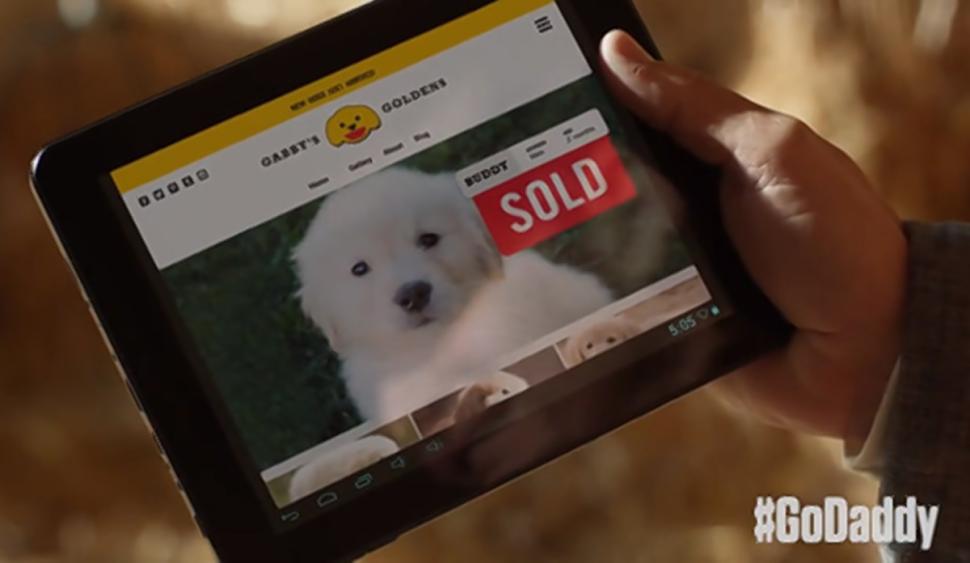
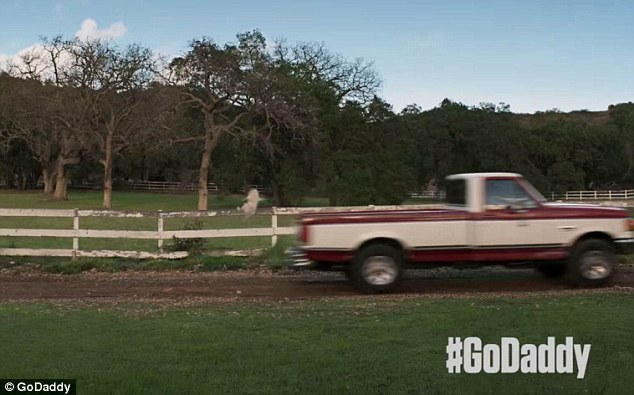
  • GoDaddy reaches beyond its limited ad portfolio of the inexplicably raunchy or anything with Danica Patrick to parody this saccharine canine saga of lost puppy "Buddy's" treacherous "Journey Home." But upon the pup's victorious return, he is promptly sold online (thanks to GoDaddy technology) and coldly shipped out to places unknown. This sarcastic and mean-spirited ad gives more homage to the Budweiser brand than its own and reveals the creators' huge blind spot for what is and isn't funny. This ad was created by agency Barton F. Graf 9000.
2015-02-02-godaddy29n3web.jpg
@Pet360/Twitter
Budweiser's ad scores a touchdown of big love before the big game and GoDaddy's gets an incomplete pass, with its ad yanked from the Super Bowl just hours after its debut on "The Today Show" due to a hue and cry from offended fans and animal rights advocates. Why does the beer company's more predictable and syrupy ad achieve a giant win and GoDaddy's riskier and potentially more creative spot score an epic fail?

There are three key reasons that Budweiser's campaign connects and GoDaddy's fumbles - all rooted in key tenets of sound marketing and promotion. These marketing principles and other fundamentals of entertainment and media marketing are covered in my upcoming book Transmedia Marketing: From Film and TV to Games and Digital Media.

#1: Know Your Story 

Since the days of cavemen, humans have been impelled to tell stories, spinning a good yarn enhanced by the special effects of the flickering campfire. Ancient storytelling is documented in France's Chauvet Cave walls from almost 30,000 years ago. There are seminal stories that we all relate to that are retold millions of times in many forms - from oral storytelling traditions and ballads to films and multi-player games. According to Christopher Booker's The Seven Basic Plots, there are seven archetypal stories that appeal to universal emotions: Slaying the Beast, Rags to Riches, The Quest, Voyage and Return, Comedy, Tragedy, and Rebirth.
  • Budweiser's "Lost Puppy" ad is The Quest - the protagonist's journey toward a major goal. Some key examples from literature include Homer's The Odyssey, Jason and the Argonaut's recovery of the Golden Fleece, and A Midsummer Night's Dream, and from modern entertainment, The Wizard of Oz, Lord of the Rings, and Finding Nemo. In The Quest stories, we want our heroes to make it "home" almost as much as we want to breathe. When they do, it is profoundly comforting and satisfying.
  • GoDaddy's "Journey Home' parody was aiming for Comedy. This plot needs a light and funny hero who triumphs over an adverse situation or unteases misunderstandings, resulting in a happy ending. Some key examples from literature include Shakespeare's A Midsummer Night's Dream, Much Ado About Nothing, and Twelfth Night, and from modern entertainment The Importance of Being Earnest, Four Weddings and a Funeral, and Lizzie Bennet's Diaries. In "Journey Home," if there had been several humorous happenstances (perhaps all powered by GoDaddy) along the puppy's journey that ironically landed the puppy home, the ad might have worked brilliantly. But our canine hero made it home on his own steam, only to be callously sold. Hence, the ad became a heinous abomination of the Tragedy, a storyline in which the protagonist is a villain, (not an innocent puppy) who falls from grace (not a speeding truck) and whose demise is a happy ending. Some key examples from literature include Macbeth, Romeo and Juliet, and Les Misérables, and from modern entertainment, The Great Gatsby, Chinatown, and Crash. But since this puppy is not a villain, the unhappy ending is a massive emotional assault. The spot delivers on neither Comedy nor Tragedy.
2015-02-02-251F91AE000005780Plot_twist_The_truck_hits_a_rock_and_the_Golden_Retriever_puppy_m79_1422392782307.jpg
Courtesy Daily Mail.com January 27, 2015

#2: Don't Mess With Babies and Puppies

Another key tenet of effective marketing and promotion is that celebrities, sex, babies and puppies sell. Celebrities have endorsed products to make them "cool" since the '20s when Chesterfield and Lucky Strike cigarettes used actors, comedians, and opera singers to create a whole new generation of smokers. Beyoncé endorses Pepsi and LeBron James endorses Nike. Selling with sex appeal is one of the oldest saws in the advertising industry, predicated on Boy Gets Girl and visa versa. Clairol's "Does she . . . or doesn't she?" signature 1957 campaign was about the lengths women go to look beautiful. The car industry has adorned cars with beautiful women to make men take notice. David Beckham's almost-nude 2012 Super Bowl ad for H & M clothes garnered almost 110,000 social media mentions within 45 minutes. 

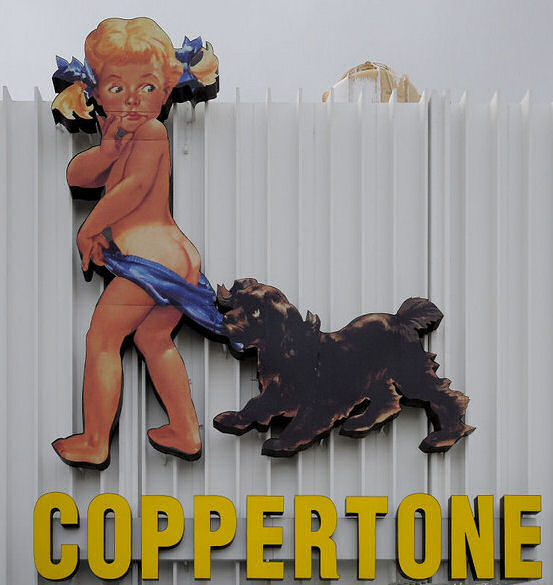
Then there's the adverting cliché of babies and puppies. The mere sight of them elicits an emotional reaction, which is why animal and kid photos and videos are the most shared on social media. We are evolutionarily wired to feel compassion and a sense of protection toward young creatures. That's why we think babies - and by extension puppies and kittens - are cute. It ensures our species' survival. These scientific and psychological truths haven't escaped advertisers. For more than 60 years, Coppertone has used "Little Miss Coppertone," an energetic little girl whose fun-loving cocker spaniel grabs her skivvies to reveal her tan line. This still vibrant brand offers a two-for-one special - a cute little girl and her dog.
2015-02-02-Figure24.2_Coppertone_sign_miami.jpg
By Alexf; licensed under creative commons via Wikipedia Commons
  • No surprise, Budweiser's huggable little Golden Retriever Puppy (the most popular dog breed in the U.S.) juxtaposed against the grandeur of the beloved massive Clydesdale draft horse makes for an irresistible strange bedfellows animal love story. This original story and its sequel leverage the equity of the Clydesdales, which have captured Americans' hearts for almost three decades, and adds another huggable character. Twice the lovability.
  • The moral of this story for GoDaddy is you can't add an evil twist that jeopardizes the heartwarming appeal of babies and puppies. It's a simple, straight-forward emotion. You can add some humor to hit another emotional note like Geico's "Camel Hump Day" does - the obnoxious camel crashing offices to celebrate Wednesdays and therefore him. But it still must be a happy, uplifting resolution. So when Buddy's owner says, "I'm so glad you made it home! Because I just sold you on this website I made with GoDaddy. Ship him out!," GoDaddy messed with the requisite happy ending, thereby breaking the rules of story plot and of how to treat cuddly babies.
#3: Don't Underestimate the Power of Digitally-Engaged Audiences

Sound marketing, like all good storytelling, engages audiences by reaching the limbic part of the brain. It creates opportunities for audiences to find meaning in and authentically participate with a brand on various media platforms. This translates into audience loyalty for and ambassadorship of a project - the Holy Grail of branding, marketing, and engagement. When fans use, love, and tell others about your media content or project, that's a smash hit.

Social media enables audience ambassadorship of a product. That's because the social universe is about self-expression through personalized social storytelling - audiences sharing what they deem interesting, important, or funny; telegraphing who they are and what they believe in; and recommending products or supporting causes. The trick is to get social audiences to become co-protagonists, connecting their personal stories to your brand's narrative. 

To harness its immense power, social media is used as the vital connective tissue to various elements of a brand or its marketing. Hence, most Super Bowl TV spots are launched online before the big game and promoted leading up to and after the event.
  • Budweiser's "Puppy Love" spot from last year's Super Bowl was the most shared and beloved ad in Facebook history. This year's "Lost Dog" promises even more audience engagement. First, the Super Bowl spot was treated like a feature film with its own online teaser campaign of images and animated GIFs of the pup's journey home, created by Anomaly. In addition, Budweiser developed an online campaign for audiences to find the pup, launching on Twitter on January 7th with a photo of the rancher and his Clydesdale hanging "Lost Dog" signs. It was followed by a January 21st tweet, "Help our rancher find his puppy and you could win tickets to the Super Bowl. Watch to learn how. #BestBuds #sweeps" with a video explaining the contest. Daily tweets entreated fans to be on the lookout for the lost dog and participate in the sweepstakes. Fans nationwide have posted pics of the "Lost Dog" and other brands - from @USATODAYmoney to @lenovoUS - have lodged support for the pup, all using the campaign's hashtag, #BestBuds. The online "Lost Dog" spot has garnered 55 million views before the Super Bowl.
2015-02-02-tweetcontest.tiff
@Budweiser/Twitter
  • Because GoDaddy's spot features a puppy that is sold online, animal rights advocates felt it implied endorsement of illegal puppy farming. The animal protection charity, The SPCA posted tweets using hashtag #GoDaddyPuppy, condemning the spot and explaining why buying a puppy online may be irresponsible. As a result, the animal anti-cruelty crowd erupted online. Animal rights advocate Helena Yurcho launched a Change.org petition to pull the ad, securing more than 42,000 signatures in a day. GoDaddy capitulated quickly with CEO, Blake Irving saying on a January 27th statement, "....we underestimated the emotional response. And we heard that loud and clear. The net result? We are pulling the ad from the Super Bowl. You'll still see us in the Big Game this year, and we hope it makes you laugh." Cynics think it was all on purpose. Most likely, it was a big gaffe, because "all publicity is good publicity" simply isn't true. "The Journey" satire reveals the dangerous flip side of the power of engaged social audiences who critique with as much fervor as they support.
2015-02-02-SPCA.tiff
@animalrescuers/Twitter
This puppy saga demonstrates that ads are short stories and that there are some key storytelling principles that good ads most follow. What is says about the Patriots' and Seahawks' face-off is hard to divine, but surely there was a narrative to the big game. It may fall into one of the seven archetypal stories: Slaying the Beast, Rags to Riches, The Quest, Voyage and Return, Comedy, Tragedy, and Rebirth. Of course, who's the protagonist and who's the antagonist depends on your football team allegiance.

Which of the seven seminal storylines you think the Super Bowl followed and why? Follow Anne Zeiser on Twitter @azuremedia